
Sources for San Francisco Previous Residents
The era table is a research map for a San Francisco house history. The previous residents trail uses San Francisco ownership sources and occupancy sources, which overlap but are not interchangeable. The city directory collections themselves are described in the San Francisco directory archive; the backward San Francisco address trail below uses those collections without treating them as a current roster.
| Source | Years it covers | Where held | What it shows |
|---|---|---|---|
| San Francisco current assessment and PIM | Current | San Francisco Assessor-Recorder and Planning | Parcel identity, block and lot, assessment and map context |
| San Francisco Recorder ownership and transfers | 1914-present | San Francisco City Hall Room 190 and copy route | Modern title parties and recorded instruments |
| San Francisco grantor and grantee index | 1848-1913, incomplete | San Francisco History Center and FamilySearch | Parties, dates, deed book and page |
| San Francisco selected deeds | 1848-1863 and 1894-1906, incomplete | San Francisco SFHC and FamilySearch | Transaction and legal description |
| San Francisco city directories | 1850-1982, with gaps | San Francisco SFPL and digital collections | Listed resident, address, occupation |
| San Francisco reverse and Haines directories | 1953 onward; Haines 1976-2021 | San Francisco SFPL | Address or telephone to listed person or business |
| San Francisco Great Registers and voter records | 1866-1964; online portions 1867-1940 | San Francisco SFHC, FamilySearch, Ancestry Library | Voter, address, age, party, sometimes occupation |
| San Francisco federal census | 1860-1950 public for San Francisco | San Francisco NARA, SFPL databases, FamilySearch | Household and enumeration address |
| San Francisco block books and Sanborn maps | Snapshots from the 19th and 20th centuries | San Francisco SFHC, LOC, SFPL | Owners, lot geometry, building footprint and use |
San Francisco gaps are part of the evidence. A missing volume, an incomplete index, or a destroyed San Francisco record should lead to another source, not an invented continuity.
Begin a San Francisco Past-Resident Trail
Start the San Francisco previous residents trail with the Property Information Map. Enter the current San Francisco address, accept the normalized form, and save the exact block and lot. Check the San Francisco Assessor Property Search for assessment context and the parcel's situs. The owner or tax-mailing destination, when lawfully visible, is a present ownership clue, not proof of who occupies the building.
San Francisco condominiums can place many lots at one street address. San Francisco corner parcels can carry a situs on one street and an entrance on another. A San Francisco deed may describe the land by legal language rather than a modern street number. Save the San Francisco map geometry and legal description before searching backward.
- Normalize the San Francisco address in PIM and record block, lot, parcel shape, and cross streets.
- Compare the San Francisco Assessor result and current property facts without treating them as a household list.
- Locate the current San Francisco vesting document through the Recorder copy route.
- Read the legal description and record the San Francisco grantee, grantor, date, instrument type, and document reference.
- Use the seller's name as the next search key, then add historical San Francisco directories and maps.
That first San Francisco step makes a house history resilient when a street name, parcel split, or number changes.
Walk San Francisco's Past-Resident Deed Chain
San Francisco recorded documents are indexed by party and legal description, not by a universal “past residents” field. Begin with the current owner or vesting document. Search that owner as grantee to identify the acquisition, then search the seller as an earlier grantee. Check both grantor and grantee roles, date ranges, spouse and trust variants, and entity names.
- Find the current San Francisco block and lot and request or locate the vesting instrument.
- Read the legal description and compare it with the San Francisco PIM parcel, cross streets, and any condominium schedule.
- Write down each San Francisco grantor, grantee, recording date, book and page or document number, and instrument type.
- Search the earlier seller as grantee and repeat until the San Francisco sequence reaches 1914.
- Bridge to San Francisco SFPL's incomplete 1848-1913 index and selected deed volumes, then call the referenced book and page.
- San Francisco grantor
- The San Francisco party conveying or releasing an interest in the instrument.
- San Francisco grantee
- The San Francisco party receiving an interest, which may be an individual, trust, or entity.
- San Francisco chain of title
- The linked sequence of recorded interests used to trace San Francisco ownership backward.
- San Francisco legal description
- The parcel language that can preserve continuity when a San Francisco street number or name changes.
[RESEARCH GAP: the required successful grantor-grantee screenshot and a successful criss-cross collection screenshot were not present in the manifest.] The official recorded-document copy route remains the custodian path for current instruments and copies.
Cross San Francisco's 1914 Title Handoff
The San Francisco County land trail changes repositories at 1914. San Francisco Assessor-Recorder staff direct ownership and transfers from 1914 forward. San Francisco SFPL holds an incomplete 1848-1913 grantor and grantee index, plus selected deeds from 1848-1863 and 1894-1906. The split is more useful than a vague claim that old deeds are “online.” It tells a researcher when the modern San Francisco office sequence stops and the library or FamilySearch sequence begins.
Keep the San Francisco 1914 handoff visible in notes. A book and page from the earlier San Francisco index is a locator, not a complete answer until the deed or selected volume is read. Use the legal description and San Francisco block-book geometry to test whether the earlier parcel is the same land.
The San Francisco History Center also holds the municipal archive. San Francisco card indexes and staff guidance can connect a parcel to an item that is not obvious in a public web search.
San Francisco Reverse Directories for Past Households
San Francisco ownership is not occupancy, so add the historical directory layer. Regular Polk reverse sections begin in 1953. Haines Criss-Cross runs 1976-2021. Special San Francisco address-first volumes reach back to Street Address Lists for 1933 and 1936, a House and Street Directory for 1940, and Andrews Real Property Directories for 1943 and 1949. The alphabetic San Francisco city directory run covers 1850-1982 with gaps.
For earlier San Francisco decades, search the alphabetic volume for a candidate surname, then confirm the address. Search spouses, initials, employers, and nearby cross streets when the name changes. Read the abbreviation key. `h`, `r`, `bds`, `clk`, `lab`, and `wid` do not carry one fixed meaning across all publishers.
An address listing establishes that a publisher printed a person or business at that place in that edition. It does not establish a continuous stay, legal ownership, or current presence. Treat disappearance as a question, not a conclusion.
San Francisco Census and Directory Years
Directory years sit between federal census snapshots. San Francisco census schedules from 1860-1950 are public under the 72-year rule. HeritageQuest through an SFPL card or PIN, NARA, and FamilySearch provide routes to the schedules. Great Registers cover 1866-1964 with an incomplete 1985 set, and online portions cover 1867-1940. California voter registrations in Ancestry Library Edition cover San Francisco 1900-1940.
Choose a known census or vital-event year, find the household or address, then work one directory year forward and back. Compare surnames, age, occupation, spouse, and house number. A quoted address can help with the historical voter database. Access to 1945-1964 Great Registers and the 1925 block-book set needs 48-hour notice at SFPL.
Differences can reflect a move, a missing person, a name change, publisher scope, or a record gap. Record the alternative explanations.
San Francisco Building Dates and Deeds
DBI permit and complaint records can add application, work, contractor, inspection, and completion chronology. The original SFPUC water applications, requested from 525 Golden Gate Avenue at 415-551-3000, can provide an early service or building-date clue. Block books show owner and lot snapshots. Sanborn maps show footprint, use, materials, and street-number context, with exact sheet years varying by district.
These records help explain why an earlier address seems to disappear. A rebuild, subdivision, corner change, or number shift can break a text search while leaving the parcel or legal description intact. Compare the building footprint, cross streets, and lot dimensions before assuming two records describe different land.
SFPL's house-history guide brings deeds, directories, block books, voters, and building research into one local workflow.
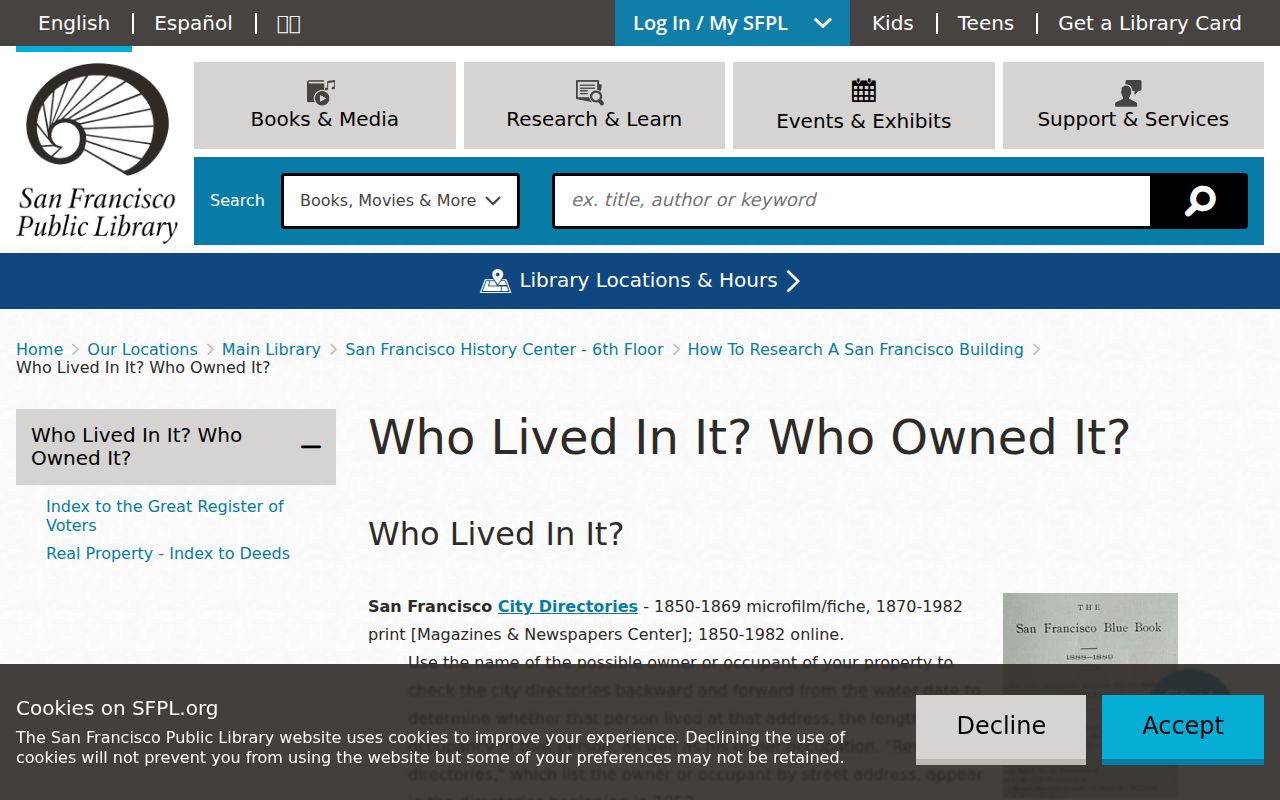
The guide's collection list is a useful check against stopping at the current deed.
Bridge San Francisco Previous Residents Across 1906
The April 1906 earthquake and fire destroyed records and displaced people, making a single-source house history unreliable. January and October 1906 block books provide paired ownership snapshots. Pre-fire and post-fire directories, newspaper notices, deed indexes, water applications, photographs, and surviving permits can show whether a property was rebuilt, renumbered, or occupied by a different household.
SFPL's Raking the Ashes: Genealogical Strategies for Pre-1906 San Francisco Research describes the local reconstruction mindset. Search the nearest surviving year, check the address list, and use a newspaper or vital event to explain a break. Do not silently fill missing 1906 information with a modern address.
Street-name changes and renumbering have no one official public master list in the research material. Use SFPL street-name files, Board ordinances, contemporaneous maps, block books, and legal descriptions.
San Francisco Family Records Close the Trail
San Francisco obituaries can identify descendants, spouses, occupation, a funeral home, or a later place. San Francisco probate petitions and orders can identify a decedent, petitioner, fiduciary, or heir. SFPL's obituary guide points to Daily Alta California, Morning Call, San Francisco Call, Chronicle, Examiner, microfilm, historical databases, and Heritage Hub. Use a notice as a relationship lead, then compare its date and San Francisco address with a directory, deed, or vital index.
California vital records distinguish authorized and informational copies. Older San Francisco birth and death routes run through local custodians and CDPH, while confidential marriages and adoption material have special limits. An older San Francisco birth-certificate service can establish an event without making an open list of living relatives.
The older San Francisco birth-certificate route is one of the local endpoints captured for a historical search.
Older death events follow the San Francisco death-certificate service or the statewide custodian, depending on the record and date.
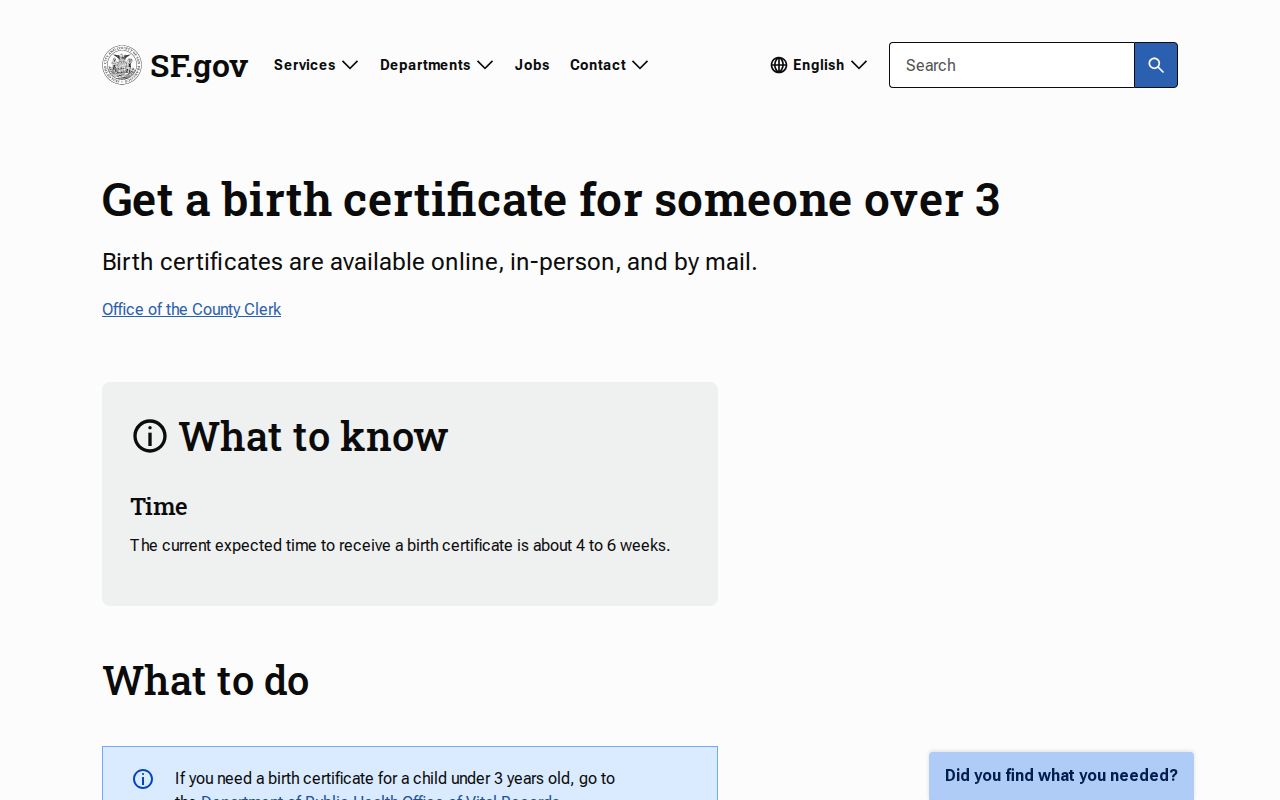
Use the custodian's eligibility rules before ordering a certified copy or treating a family clue as proof.
A San Francisco Past Address Elsewhere
The California State Controller's unclaimed-property search accepts an owner or business name, first name, middle initial, city, and property ID. A result can show a reported address, holder, property type, and property ID. It can connect a former San Francisco name to a historical financial relationship when a directory trail ends, but it does not prove current residence or ownership of the underlying property.
Business filings, professional licenses, obituaries, probate, and community directories can play the same supporting role in a previous residents search. Each is a dated snapshot. Keep the source's own label, and do not convert an address of record into a claim about a household.
The State Controller search is free to query; claims require proof through the official process.
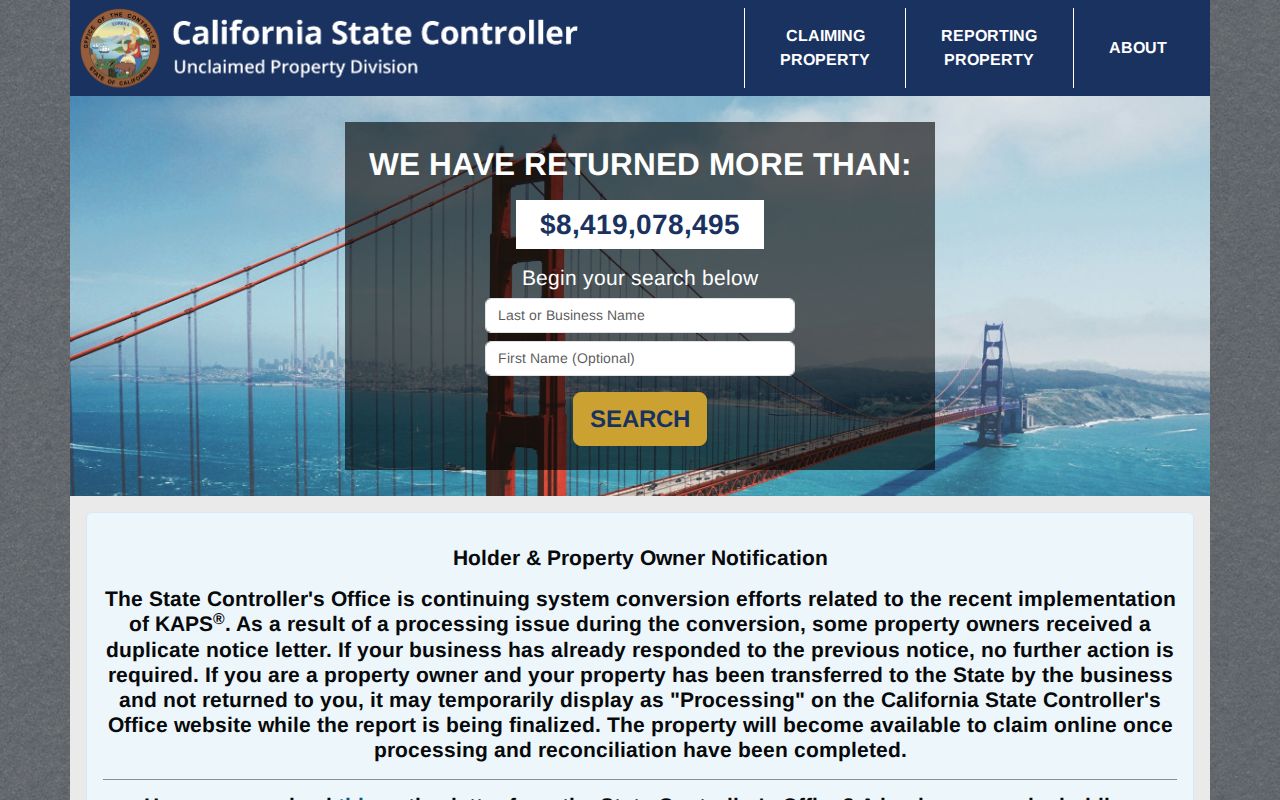
A financial relationship can extend a research trail, but the custodian's claim rules and record date still control.
California Vital Copies for Past Residents
When a directory trail points to a birth or death, the California Department of Public Health remains a statewide route for forms, eligibility, and current fees. The CDPH vital-records page explains the custodian path, while the state fee page controls the amount at the time of order.
Authorized and informational copies serve different purposes. Use the application and eligibility rules for the record type, and keep an informational copy's identity disclaimer attached to the research note.
California's Safe at Home program provides a substitute mailing address and confidential mail forwarding for qualifying participants. Confidential voter registration can also shield a person. Protection is deliberate and is not a universal deletion of every public deed or historical source.
Do not use a previous-residents search to work around a protected address. If a record is restricted, follow the custodian's lawful access route.
Limits on San Francisco Previous Residents
San Francisco previous residents can be missed by directories, census timing, voter eligibility, publisher coverage, destroyed records, name changes, and protected records. A San Francisco deed chain follows title, not every household. A block book preserves an ownership snapshot, not a full roster. A current owner may have no connection to a past occupant, and an old listed person may have been a visitor, boarder, or business contact.
Lawful house history. Use address research for genealogy, preservation, family history, and civic understanding. Do not use a previous residents result to stalk, harass, threaten, or harm anyone.
When the question shifts to the current street chain, use the San Francisco street directory. When it narrows to one person, use the resident lookup route and corroborate the identity.