
San Francisco Resident Lookup Scope
Each San Francisco record answers a narrower identity question. The table keeps the main San Francisco resident lookup sources distinct so that a San Francisco property owner is not described as an occupant, a San Francisco court party is not described as a conviction, and a San Francisco directory listing is not described as current.
| Record | What it can confirm | Where | Access |
|---|---|---|---|
| San Francisco Assessor and parcel | San Francisco ownership context, parcel, and mailing destination when lawfully visible | San Francisco Assessor Property Search and PIM | Free web tools; limits apply |
| San Francisco recorded instrument | Named San Francisco party received or transferred an interest on a date | San Francisco Recorder Division | Index and copy route |
| San Francisco Superior Court index | San Francisco person or entity appears as a case party | San Francisco Superior Court | 1987 listed matters; images vary |
| San Francisco vital record | San Francisco birth, death, marriage, or family relationship event | San Francisco SFDPH, County Clerk, and CDPH | Authorized or informational copy rules |
| San Francisco business or license | Public San Francisco entity, officer, agent, or professional affiliation | San Francisco SOS bizfile and DCA | Free searches with board limits |
| San Francisco directory, census, or obituary | Historical San Francisco address, household, occupation, or relationship clue | San Francisco SFPL and archival databases | Era and collection dependent |
Start with the San Francisco record closest to the known fact. A San Francisco case number is stronger than a shared name. A dated deed is stronger than an undated address summary. A relationship in a San Francisco probate or vital record is stronger than a directory abbreviation. The result should say what was confirmed and what remains unknown.
Build a San Francisco Resident Match
Define the San Francisco target before searching. Write the exact spelling, initials, aliases, known date, neighborhood or address, business, school, spouse, and relationship. San Francisco's multilingual history makes reordered Chinese names, compound Spanish surnames, married-name changes, transliteration, and anglicization part of the search problem. San Francisco variants are search prompts, not permission to guess.
- Anchor the San Francisco name to a known date, place, case role, business, family relationship, or address.
- Search the official San Francisco index closest to that clue, keeping every variant and result identifier.
- Compare the middle name, entity, spouse, occupation, parcel, or chronology with a second San Francisco source.
- Read the San Francisco record type precisely: a complaint is an allegation, a docket is a court trail, and an image or certified copy carries different weight.
- Label uncertainty and ask the San Francisco custodian to correct the authoritative record when a result is wrong.
A shared name plus San Francisco is weak. A San Francisco court party whose date and entity affiliation align with a business filing can be a stronger match. Even then, a resident lookup does not prove current occupancy. The San Francisco custodian's record controls the fact that record actually keeps.
- San Francisco docket
- The San Francisco court's running record of filings, events, dates, hearings, and status in a case.
- San Francisco index versus image
- An index points to a San Francisco record; an image shows the document when online access and privacy rules allow it.
- San Francisco certified copy
- A copy issued with the San Francisco custodian's certification, often subject to eligibility, identity, payment, or sworn-statement rules.
- San Francisco disposition
- The stated San Francisco procedural outcome or closing status, which is different from the filing allegation.
San Francisco Court Party Search
The San Francisco Superior Court online-service menu supports name searches for San Francisco unlimited and limited civil, Family Law, Probate, and Small Claims matters beginning with cases filed in 1987. Criminal search is a separate service. A San Francisco name query accepts a party or company name, with a case number as an alternative or deeper key. The official guide describes formats such as surname, surname comma first name, or company name.
| Search or result field | Use in a San Francisco resident lookup |
|---|---|
| San Francisco case category | Choose civil, family, probate, or small claims; criminal follows a separate route. |
| San Francisco party or company name | Try surname, surname comma first name, and entity variants. |
| San Francisco case number | Moves from a name hit to a specific court file and is needed for some family display. |
| San Francisco caption and role | Shows the named parties and whether each is petitioner, respondent, plaintiff, defendant, fiduciary, or another role. |
| San Francisco Register of Actions | Shows event dates and descriptions; eligible image years differ by case type. |
Civil images are available from 2001. Estate and trust probate images also begin in 2001. Small-claims images begin in 2008. Family registers require a case number and family images are not online. Guardianship, conservatorship, elder-abuse, sealed, confidential, restricted, juvenile, adoption, and protected-address material may be withheld or redacted. An absent image is not an absent filing.
The Northern District of California court page supplies the federal route, while PACER searches federal party names and charges by the current federal schedule. PACER is not a criminal-history report. Courthouse terminals can offer free viewing, with printing charges.
The court's name-query coverage guide spells out the 1987 start and the image limits by case type.
The local court-services capture shows the menu that leads to name and case-number tools.
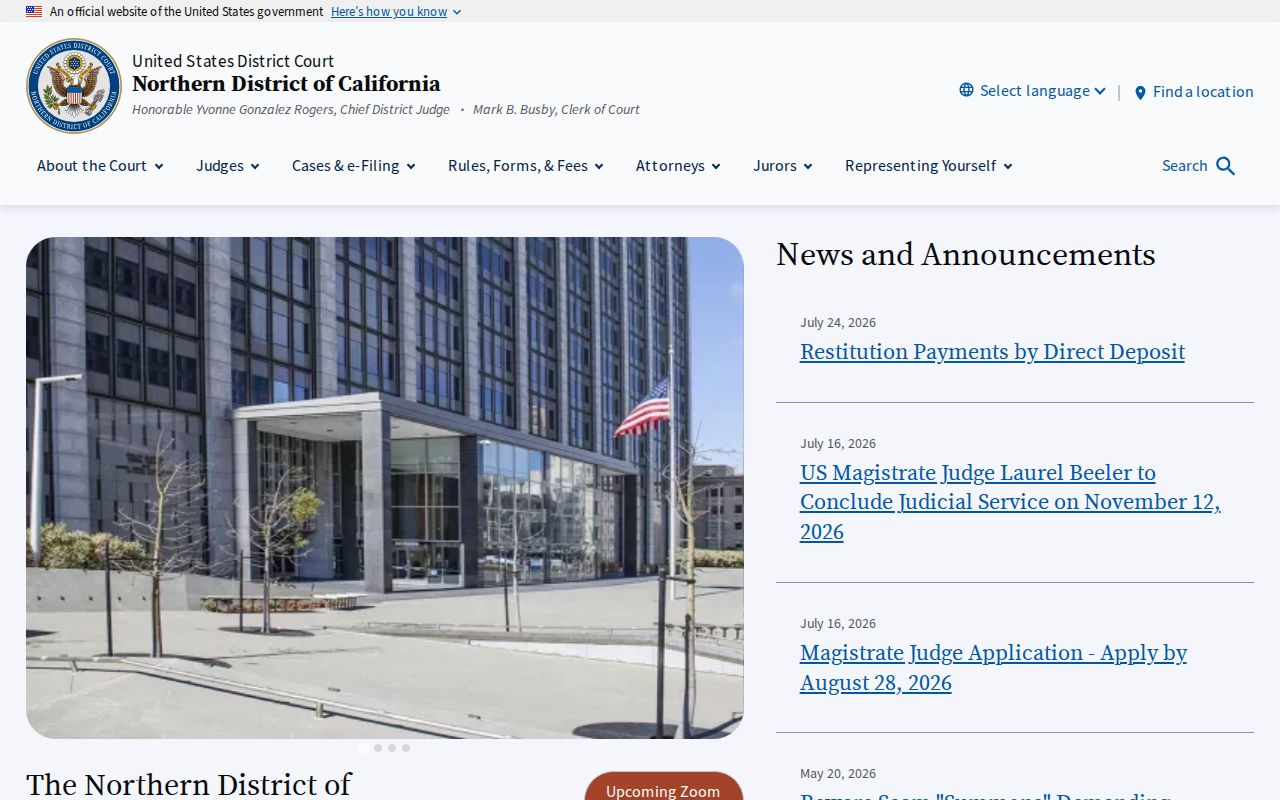
Read a court result as a dated party record, then compare it with a separate source before treating it as the right person.
PACER's federal case locator is the separate route for Northern District of California federal filings.
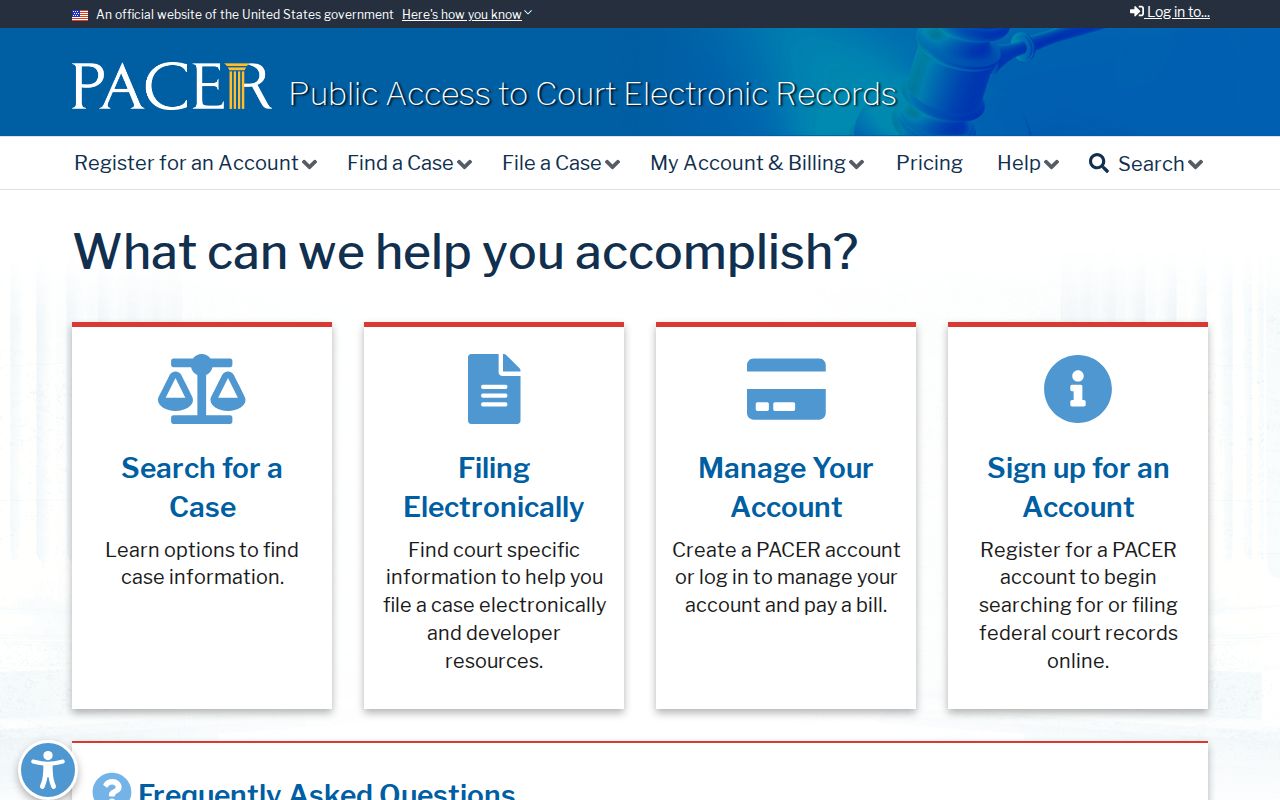
Federal party searches have their own access charges and sealed-filing limits, so a federal result remains a dated court clue.
San Francisco Vital Record Rules
San Francisco births and deaths move among the San Francisco Department of Public Health Office of Vital Records, the San Francisco County Clerk, and the statewide California Department of Public Health. Public access to San Francisco records is not a simple “open after a set number of years” rule. California distinguishes authorized certified copies from informational certified copies under Health and Safety Code sections 103526 and 103526.5. An informational copy is marked as not a valid identity document.
San Francisco birth and death applications ask for the applicant's name and contact details, the registrant or decedent's full name, event date and place, parents' names for a birth, relationship and purpose, copy type, payment, and delivery details. An authorized San Francisco request requires a sworn eligibility statement, and mailed requests can require notarization. The current application controls the eligible categories and fee.
Public San Francisco marriages follow County Clerk or CDPH routes. Confidential marriages are restricted under Family Code section 509. Divorce files belong with San Francisco Superior Court, while CDPH has a statistical or certificate function for applicable years. Adoption files remain sealed unless the lawful CDSS mutual-consent, contact, or court process applies.
[RESEARCH GAP: the required vital-record application capture was not available as a successful manifest image.] Use the California vital-record forms route and current state or local fee page before submitting.
San Francisco Voter Lookup Limits
The San Francisco Elections Voter Portal asks for a San Francisco house number, registered ZIP Code, and date of birth. It lets the voter check San Francisco registration, party preference, districts, ballot status, vote-by-mail status, and participation history. A non-match can reflect an input error, an inactive or pending record, confidentiality, or a different entry. It does not prove that a person never lived at a San Francisco address.
California voter-file access has approved-purpose rules for San Francisco data under Elections Code sections 2188 and 2194 and related regulations. The application records the requester, organization, geography or file, intended use, safeguards, and agreement not to redistribute. Confidential voters and protected records are excluded. Full birth dates, signatures, identification numbers, and Social Security data are not general public-directory fields.
[RESEARCH GAP: the required voter-lookup capture was not available as a successful manifest image.] Do not ask another person for authentication details. A person seeking confirmation should contact the Department of Elections directly.
Approved-purpose applicants use the California voter-file request instructions, including the stated fees, credentials, safeguards, and use agreement.
San Francisco Business and License Checks
When a San Francisco name is connected to a business or profession, California's official affiliation sources can be more precise than a general resident lookup. A San Francisco resident lookup can use bizfile Online by entity name or file number, with advanced filters for entity type, status, and initial filing date. Recent Statements of Information commonly show entity name and number, status, jurisdiction, formation date, principal and mailing addresses, agent for service, and officers or managers according to the form.
The San Francisco Department of Consumer Affairs advanced search accepts first and last name, license or registry number, business, board or bureau, license type, city or county, status, and discipline filters. Results can show license type and number, status, issue and expiration dates, address of record, and board-dependent public discipline. A San Francisco address of record is a professional contact point, not personal residence proof.
County Clerk fictitious business name filings add a dated registrant and business-name relationship. State Bar, Contractors State License Board, Department of Real Estate, medical boards, and nursing boards each maintain separate search routes. A no-result in one board does not close the statewide path.
The DCA search capture demonstrates the filters available for a public professional record.
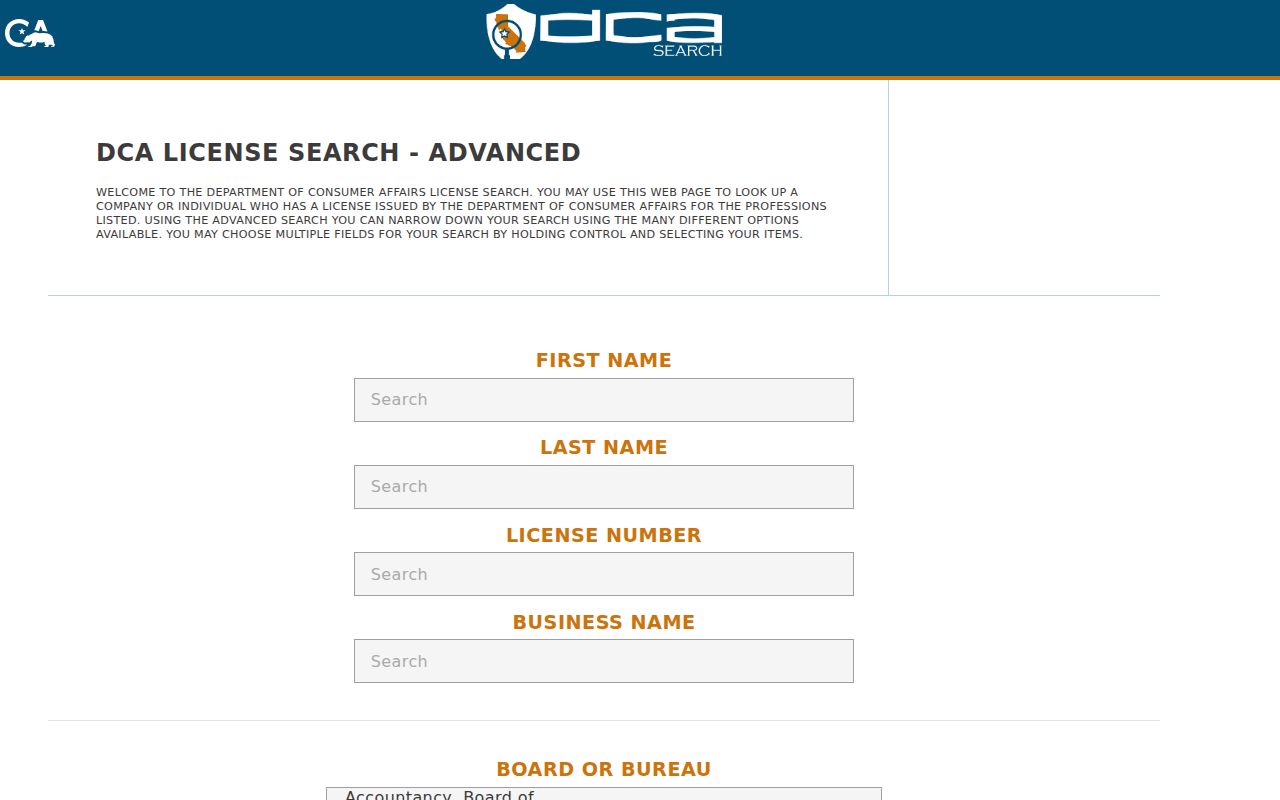
Use a business or license result to corroborate a person, not to convert a public role into a private address claim.
San Francisco Heir and Classmate Paths
An heir search usually combines a probate petition or order with a decedent's obituary. Probate may name a petitioner, fiduciary, or heir in a public filing, while an obituary can supply family relationships. A former classmate can be traced through SFPL yearbooks, school archives, newspapers, and lawful alumni contact routes. A business owner can be checked with bizfile and a County Clerk FBN.
Birth-parent research is different. California's adoption-information, mutual-consent, contact, and court procedures are the lawful path. There is no open directory shortcut around sealed adoption records. For an old address, use block and lot, reverse directories, deeds, census, obituaries, and probate in sequence. A former listed occupant may be a household member rather than an owner.
San Francisco's community collections can add context: Chinese directories, the Hormel LGBTQIA Center, Jewish genealogy groups, parish archives, university special collections, yearbooks, oral histories, and neighborhood newspapers. Each repository sets its own access rules, and a community listing should be described as a historical or public affiliation.
Correct a San Francisco Source Record
A republished San Francisco search result cannot amend the record it repeats. Send assessment questions to the San Francisco Assessor, deed indexing or redaction questions to the San Francisco Recorder, docket corrections to San Francisco Superior Court, entity statements to the Secretary of State, licenses to the issuing board, and registration questions to Elections. Vital-record corrections follow the custodian's application and eligibility route.
For a San Francisco online gap, ask for a narrowly described existing record. The California Public Records Act, Government Code section 7920.000 and following, normally gives an agency 10 calendar days to determine whether responsive records exist, with a possible 14-day unusual-circumstances extension. It does not require a new list, and it does not override sealed, confidential, protected, or statutorily restricted material. Direct duplication costs may apply under section 7922.530.
Keep the original URL, date captured, exact spelling, case number, block and lot, document number, and San Francisco source date. That record trail helps a custodian identify the problem without asking a general question about a person's identity.
San Francisco Resident Lookup Legal Limits
California restricts more than it opens. Safe at Home provides a substitute mailing address and confidential voter registration for qualifying participants. DMV and utility customer addresses are protected. Court, adoption, and confidential-marriage files can be sealed or limited. Voter-file access is purpose bound. Public records access never authorizes threats, surveillance, impersonation, or harassment.
Lawful use. A San Francisco resident lookup is for personal research, genealogy, reconnecting, and civic understanding. Do not use a result to stalk, harass, intimidate, or harm anyone.
Commercial people-finder compilations can merge same-name records and lag corrections. An opt-out from a compiled copy does not remove a government source. When a result matters, verify it with the custodian and record the limits of what the source actually proves.